Metta Blessing 慈心祝福

Metta Blessing 慈心祝福
Replace your worries with loving-kindness blessings. 以慈心祝福取代您的擔憂。
Showing posts with label Contemplation. Show all posts

Thursday, July 28, 2022

Observe duḥkha

Does the first noble truth mean "there is suffering: and we need the path to eradicate it?” Or “does suffering have a dual nature (such as without suffering there is no joy)” ?


The "suffering" in Buddhism can actually be viewed from three aspects. It is not necessarily negative and pessimistic. 


For a long time, the translation of "dukkha" into "suffering" is limited and very easy to cause misunderstanding. 


In fact, when the Buddha told us "dukkha", he just conveyed the FACT, the TRUTH, and that is just a Natural Situation in the phenomenal world.


The three kinds of 'dukkha' are:


1. duḥkha-duḥkha

This is what we called Ordinary duḥkha, Concrete duḥkha or Physical duḥkha; it is a direct suffering that one experiences in sickness, exhaustion, hunger, torture, etc., apparently related to all sorts of unpleasant experiences. 


2. vipariṇāma-duḥkhatā

We called it duḥkha of decay, the duḥkha that people experience when they lose things that they are attached to / delighted to, e.g. the loss of the state of joy, happy holidays are coming to an end etc., evidently related to all sorts of pleasant experiences. 


3. saṃskāra-duḥkha 

We called it the duḥkha caused by change or the duḥkha produced by impermanence, e.g. whether we want to accept it or not, and no matter pleasant or unpleasant experience, TIME is constantly passing by every second, we are constantly in the process of CHANGE without the slightest pause.


The above three duḥkhas are all normal things in life, aren't they? That's why I said that “when the Buddha spoke of duḥkha, is just presented the Facts and the Truth to us.”


Now, is “ERADICATE” a suitable word here? 


My opinion is, we should ERADICATE the unwholesome roots, such as greed, hatred, jealousy, arrogance etc., because they are the fundamental cause of our suffering.


For duḥkha (no matter which duḥkha), what we need to do is OBSERVE (the fact, the truth, the nature of the phenomenon) and learn to ACCEPT it.


Thursday, June 9, 2022

the Contemplation on Compassion


The current news is affecting our minds and our ability to find peace. How can we find peace with the current events disturbing our minds?


Our mind may be extremely disturbed by the influence of the recent wars or shooting incidents, and it is difficult to calm down; however, as long as we try to deeply explore this "uneasy mind", we will find that it is mixed with sympathy, anger, worry, sadness, etc.


In the midst of all these complex emotional thoughts, try to focus on the emotions that are more helpful to our practice, such as: sympathy, empathy, etc.  Make good use of those emotions to strengthen our practice of “the Contemplation on Compassion” (Karuna Bhavana).


The focus of the practice of "Compassion" is to eliminate the suffering of all sentient beings, and hope that all sentient beings will be free from physical pain and inner fear.  We keep blessing in our heart: “I hope that the residents living in the war can live a stable life as soon as possible; I hope that those who have lost their loved ones because of the shooting incident can pack up their minds as soon as possible, and face their life and future with strength and wisdom.”


Therefore, every time we encounter distressing and disturbing news, let’s think of "Karuna Bhavana". At that very moment, we wish all sentient beings to stay away from suffering, and on the other hand, we calm our mind and let it calm down gradually.


Friday, July 30, 2021

Self-help & Helping Others

 Q&A (2021/07/25)

In the article entitled: Saving Vacchagotta the author states:

In refusing to answer Vacchagotta’s questions, the Buddha reveals himself as the self-help guru of them all, in the most literal sense. He is telling us: don’t mess with anything that won’t help you get to release; focus only on what can lead to your ultimate well-being and happiness. The implication of his silence on the issue of whether or not the self exists, which he explains later in the sutta to Ananda and elsewhere in the canon, is a signpost for his entire teaching on anatta, or not-self. 

Is there a literal self help program or progression of sutras that can be categorized as such?


~> The teachings of Buddhism are actually centered on the concept of "help".

~> The Three General Aspects of Buddhist Practice — Moral discipline, Meditative Concentration and Study of Buddhist Doctrines to gain Wisdom, are tend to "self-help". In the process of learning, we will improve our virtue, inner stability and wisdom.

~> The Six Pāramitās, the six practices that ferry one beyond the sea of mortality to nirvana — generosity, precepts, patience, diligence, meditation, wisdom — are developed from the level of "self-help" to "helping others."

~> Whether it is "self-help" or "helping others," Buddhism takes "eliminating affliction" as a clear learning goal.

~> It is "self-help" to reduce one's worries through practice; in the same way, if it reduces the suffering of others, it is "helping others".

~> In the process of practicing, they are called "Improving Oneself and Bringing Benefits to Others"(自利利人); in the aspect of achieving enlightenment and liberation, they are called "To Enlighten Oneself and Enlighten Others"(自覺覺他).


Sunday, October 4, 2020

Find your Entrance for The Practice of Bodhicitta

 Related to The Way to Buddhahood verse: no. 115

Some enter with the faithful vow; 

Some enter with wisdom, some with compassion.


Article Reading: 

The Three Essential Virtues by Master Yin Shun, translated & published by Hwa Tsang Monastery Australia 


Food for thought:

Recall and share : In the very beginning, which aspect of Buddhism (in terms of philosophical, social welfare or admiring the attainment) has caught your attention and lead you into the dharma practicing?


Tuesday, June 30, 2020

About Oneself


In the journey of life, we can continue to explore the value and meaning of life, but we should never make ourselves valuable by comparing with others.  In short, learn to know yourself and be yourself.
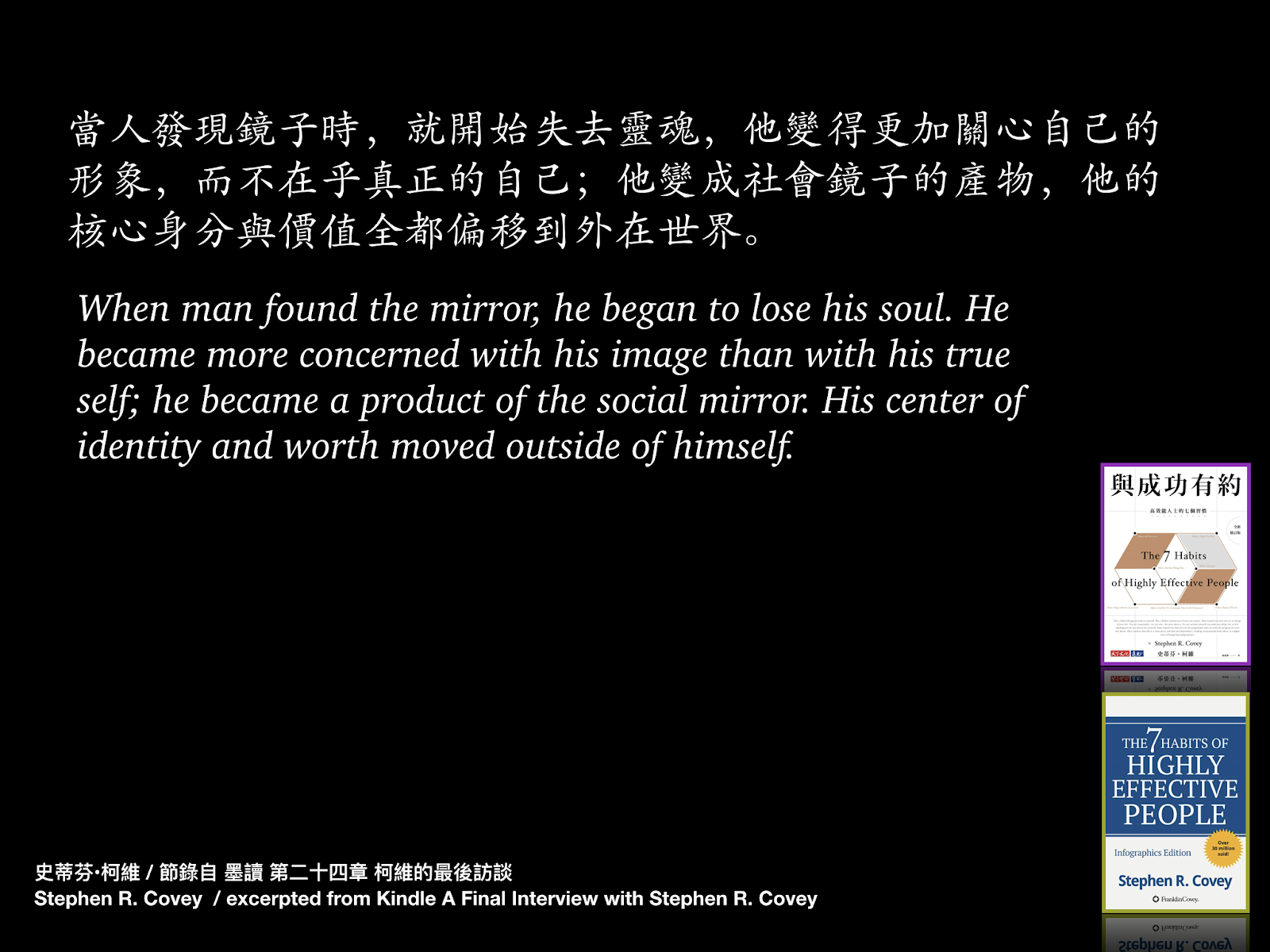
 About Oneself, is really a huge and deep life-searching-question. No quick  and easy answer. Occasionally, just be highly aware whenever we look in the mirror and ask, “am I preparing a true-self or a public-self?” 

Monday, June 1, 2020

About Heart Sutra

 Reading Material:

The Heart Sutra Will Change You Forever

by Karl Brunnhölzl| September 29, 2017


Contemplating and Sharing:

Share your understanding after article reading about:

1. A sutra about crazy wisdom

2. A brief memo for contemplating all the elements

3. The Heart Sutra is like a big koan

4. Trash all the hallmarks of Buddhism

5. The basic groundlessness of our experience

6. Emptiness is like thinking outside of the box

7. The heart of the Mahayana

8. An invitation to just let go and relax

9. We could call the Heart Sutra the Heart Attack Sutra


More About Emptiness:


All things are empty and without an independent nature, so defilements can become pure, confusion can become enlightenment, and the common can become holy. The nature of things being empty is the principle of having the possibility to be common or holy, defiled or pure, and is also the principle of having the possibility to become a buddha. Therefore, it is said, “Because existence is empty, all things can be formed.”

~~ excerpted from The Way to Buddhahood, verse 118


The wisdom that sees the emptiness of things is a skillful means, which means it is tactful. If one is not attached to the giver, the receiver, and things given, this is called possessing skillful means. If one lacks the wisdom that sees the emptiness of things and attaches to the act of giving, one is unskillful and tactless and cannot leave birth and death behind to enter the sea of wisdom.

~~ excerpted from The Way to Buddhahood, verse 120


By relying on the contemplation of emptiness, which does not posit an inherent nature, one can eliminate meaningless elaboration through continuous practice. After meaningless elaboration is eliminated, erroneous discrimination will not arise because it will have lost its object. When the mind’s discrimination stops, prajñā will arise; then one will no longer have confusion or create more karma.

~~ excerpted from The Way to Buddhahood, verse 166


Food for Thought:


How to apply the concept of “the union of emptiness and compassion” in my daily living and dharma practicing?


Wednesday, April 22, 2020

Eliminate Fears by the Method of Recollections


Reading Material:
Spiritual Advice for Fears of Pandemic
by Gesshin Claire Greenwood


The Six Recollections :

Some people are afraid of illness, death, or regression to the three evil destinies after death. Full of worry and regret, they are extremely miserable. The Buddha said that people whose minds are timid and fearful should practice the doctrine of the six recollections. 

“Recollection,” which means being mindful and remembering, is a convenient method for practicing meditation.

What are the six recollections?
The six kinds of mindfulness to dwell upon: Buddha 念佛, the Dharma 念法, the saṃgha 念僧, the precepts 念戒, almsgiving 念施, and heaven with its prospective joys 念天, according to the Dīrghâgama

The first three types of Recollections:
(1) The recollection of the excellent and solemn appearance of the Buddha, as well as the Buddha’s virtues: wisdom, grace, and freedom from defilements. 

(2) The recollection of the Buddha’s true Dharma, which is comforting and can lead to emancipation. If one can accept it and follow it appropriately, one can thoroughly understand and realize the Truth at any time.

(3) The recollection of the śrāvaka Saṅgha / The recollection of the bodhisattva Saṅgha

(3a) The śrāvaka Saṅgha: These are beings who virtuously keep the precepts, practice meditation, and have wisdom, liberation, and perfect knowledge of liberation; they are the field of good fortune in this world.

(3b) The bodhisattva Saṅgha: those who have great compassion and great wisdom and are a benefit to themselves and others.

The Result of Recollections:
When one’s mind is focused securely on the pure and awesome virtues of the Buddha (Dharma or Saṅgha), one can leave behind deviant thoughts, defiled desires, worries, regrets, and fears.

~~ excerpted from The Way to Buddhahood, verse 57

Sample videoclips :
The Recollection of the Buddha (by chanting Namo tassa bhagavato arahato samma sambuddhassa)


Literally, I pay homage to the Blessed One, the Worthy One, the Fully Enlightened One.

The Recollection of the Saṅgha (by chanting Namo Avalokiteshvara)


Literally, I pay homage to the Bodhisattva of infinite compassion and mercy.

Food for Thought:

What’s your common practice whenever you encounter fear or worry?


Thursday, October 25, 2018

Life as a practice


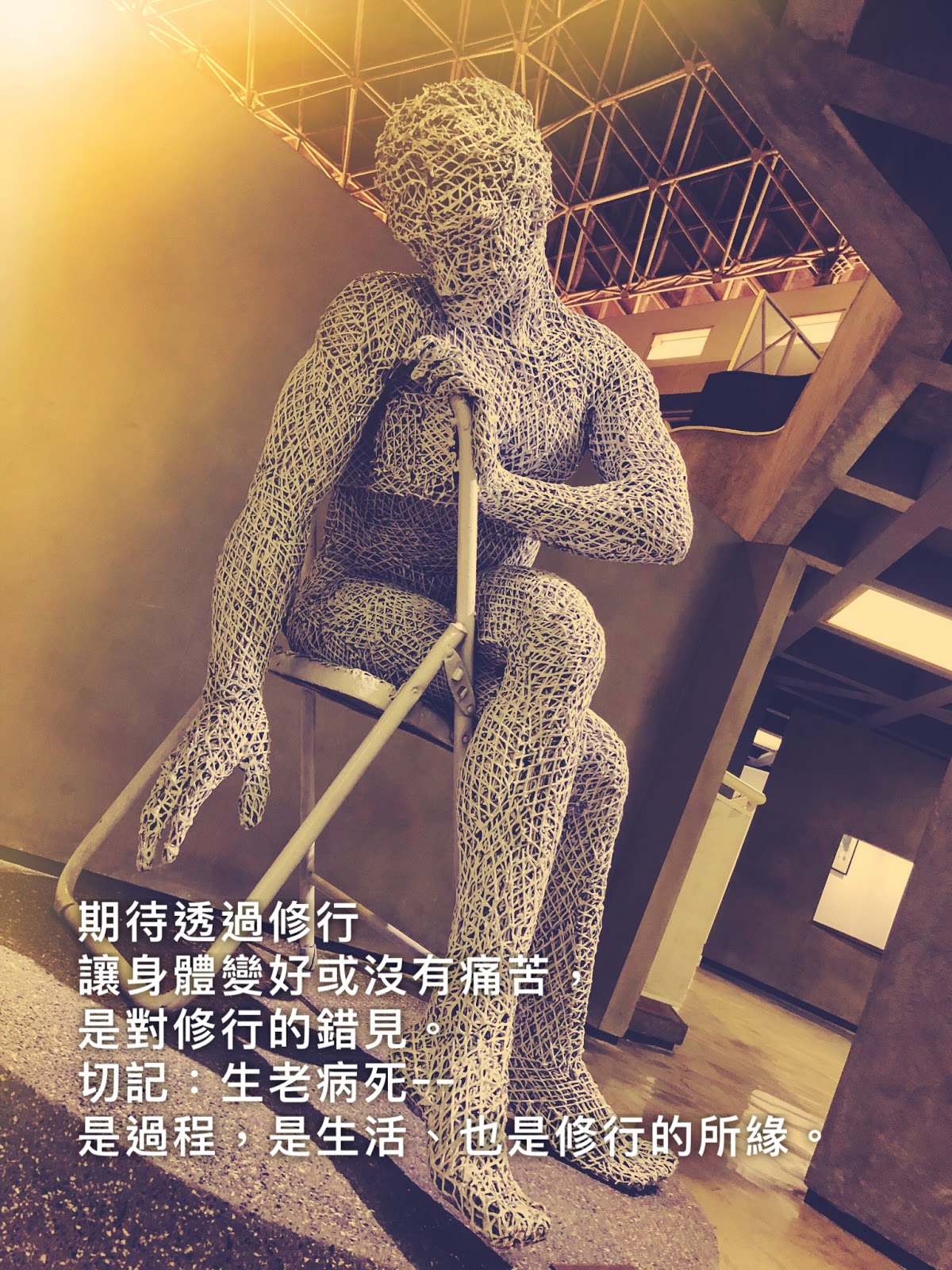
Anticipate to have a better physical body condition or 
to get rid of all sorts of bodily pain
through the Dharma Practicing,
is a very common misconception.
Never forget:
birth, old-aged, illnesses and death,
are parts of life, living and even themes of cultivation.

生命即修行

期待透過修行
讓身體變好或沒有痛苦,
是對修行的錯見。
切記:生老病死——

是過程,是生活、也是修行的所緣。


Wednesday, October 17, 2018

Cope with Uncertainty


There is no choice to meet with the uncertainty of life,
but react wholesomely should always be our preference.

應對無常

面對生命中的無常,
我們別無選擇;
惟務必確保地是:

良善應對之。


Friday, October 12, 2018

Meteorological observer


A meteorologist
observed the wind, clouds, rainfall etc.,
and records all the changes thoroughly.

A meditation practitioner 
perceives the mind-body matters 
and logs all the mental and physical phenomenon genuinely.

氣象觀測員

氣象學家
認真入微地觀察和紀錄
風雲雨等氣象變化

禪修行者
真切如實地覺照與紀錄

來自身心的一切現象


Monday, July 16, 2018

Experiencing Emotions

Meditating with Emotions

This article mainly features the usage of emotions as a tool for spiritual practice and growth.

Excerptions :

Buddhanature and the natural state are not just made up of happy, sweet emotions; buddhanature includes everything.

Emotions, in essence, are just pure energy, but because of dualistic perception we identify the emotion as “me,” and it gets very locked in.

Fundamentally, the reason emotions are discomforting, painful, frustrating is that our relationship to the emotions is not quite clear.

This is to say that energy itself is not a problem. We always associate our emotions with thoughts—we’re scared of something, or we’re angry at somebody, or we’re feeling lonely or ashamed or lustful in relationship with either ourselves or somebody else.

Our emotions have a lot of mental conversation......

If there is a way that you can interrupt the conversation through your meditation training, even for a few moments, then you can have an actual experience of dread—a nonverbal experience.

If we use our emotions as the object of meditation, as our friend and support, it’s like standing on the bank of the river and observing.

......


Friday, July 13, 2018

Transferring Wellness

We are in the era of editing and programming and even transferring DNA. 
However, never left behind the task of  refining and cultivating our mental and moral qualities, for the sake of humanity and dignity.


Thursday, July 12, 2018

Old age and death

How to Grow Old: Bertrand Russell on What Makes a Fulfilling Life
By Maria Popova

Thanks to Maria Popova whose article provided us so many life fulfilling references regarding the topic of old age and death.

Regarding that, certain ideas in the article worth reflecting, for instance: falling in love again and again, forgive and forget, the dissolution of the personal ego into something larger etc.

Excerptions :

An individual human existence should be like a river — small at first, narrowly contained within its banks, and rushing passionately past rocks and over waterfalls. Gradually the river grows wider, the banks recede, the waters flow more quietly, and in the end, without any visible break, they become merged in the sea.....

I should wish to die while still at work, knowing that others will carry on what I can no longer do and content in the thought that what was possible has been done.

......


Saturday, June 30, 2018

Healing thru writing


On Writing Letters to Famous Strangers
By A. M. Home

Came across this article unexpectedly.
Love reading it.
Share with me your thoughts, if you read.

Excerptions :

As a teenager, I wrote letters to strangers.

I didn’t write to strangers because they were famous. I didn’t want an autographed eight-by-ten. I wanted to tell them about my life, my day at school. I wanted to drive a wedge between my childhood and the larger world that I hoped I might join one day. I wanted a way out. 

We are all in more communication with each other than ever before: email, Instagram, Twitter, Facebook, etc. But when you think about communicating, think about reaching beyond what is familiar. You can reach into the lives of others. You can reach into the heart of the world.


Monday, May 7, 2018

Refreshing


Refresh yourself at this very moment.
當下更新自己。

Thursday, May 3, 2018

The Path of Growing


Practice and grow

Being on a mind cultivating path 
It does not mean that we will be free from all personnel difficulties
But we are sure in the learning process of altering the adversity to prosperity 

~修行與成長~

走上調心之路
並不意味我們將免除一切人事困境
但顯然已在化困境為順境的學習中


Wednesday, May 2, 2018

Drop the story and merely recognize


Emotions, in essence, are just pure energy, but because of dualistic perception we identify the emotion as “me,” and it gets very locked in.

...... whether it’s any strong emotion or even a milder emotion, it’s so easy for us to get stuck and wrapped up in the story and thoughts around the emotion. From there, the emotions escalate and enslave us.

One of the things that causes us to get so lost in our emotions is that we attach our stories to them.

In any given sitting period, in any given half hour of our lives, there are a lot of things that come and go. But we don’t need to try so hard to sort it all out. We don’t have to attach so much meaning to what arises, and we also don’t have to identify with our emotions so strongly. All we need to do is allow ourselves to experience the energy—and in time it will move through you. It will. But we need to experience the emotion—not think about the emotion.


放下故事,全意領受

本質上,情緒純粹只是一股能量,但由於二元化認知模式,我們將情緒識別為且深深套牢於其中。

無論是強烈或溫和的情緒,我們都很容易陷入困境,並醉心於與情緒有關的故事和想法。就在那裡,情緒逐步擴大並奴役我們。

其中一個導致我們迷失於情緒的原因,是我們把故事附加到情緒上。


在任何靜坐裡,或在任何半小時的生活中,都會有很多事物來來去去。所以,我們根本不需要費力將其全部整理出來。我們無需執意為浮現的事物賦予太多的定義,而且我們也不必過度地鑒別所有的情緒。我們所需要做的就是讓自己全意領受這股能量 —— 假以時日「情緒」僅是過客。它會變成過客。然而,我們需學會領受情緒 —— 而不是思索情緒。